
Blocked kitchen sinks rarely start as an emergency. They start as a slow drain, a faint smell, or a gurgle you learn to ignore. This case study follows a real callout in Dunstable where a simple blocked sink turned into something far bigger, and explains exactly what it takes to fix a blockage properly rather than just clearing it for a week or two.
What Actually Happened at This Dunstable Home
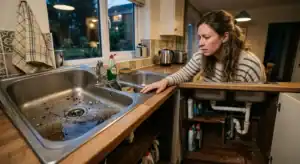
A homeowner in Dunstable contacted us after her kitchen sink stopped draining overnight. She had already tried a plunger and a shop bought unblocking gel, both of which gave short lived relief before the water backed up again within a day. By the time we arrived, the sink was holding standing water, the smell was noticeable from the hallway, and the dishwasher connected to the same waste line had started overflowing slightly during its cycle.
This combination, a blocked sink plus a connected appliance backing up, was the first clue that the problem went beyond the Ubend under the sink.
The Warning Signs She Almost Missed
Most homeowners assume a blocked kitchen sink is only about the sink. In reality, there are usually earlier warning signs that the whole waste system is under strain:
- Water draining slower each day rather than all at once
- A gurgling sound from the sink or nearby drains after flushing the toilet
- A persistent damp or sour smell near the sink cabinet
- Other fixtures, like a washing machine or dishwasher, backing up slightly
In this case, three of the four signs had appeared over about ten days before she called us. That timeline matters, because a blockage that builds gradually is often sitting deeper in the system than one that happens suddenly.
Why a Simple Unblock Would Not Have Fixed It
Our engineer started the way most jobs start, by running water and testing with a hand auger through the sink waste. It cleared a small amount of debris but the water still drained slowly. That told us the blockage was not sitting right under the sink. It was further along the shared waste pipe.
This is the mistake a lot of quick fixes make. Clearing the first few feet of pipe can bring temporary relief while the actual buildup, usually a mix of fat, oil, grease, and limescale from hard water, keeps narrowing the pipe further down. Within days, the same call comes back in.
How We Found the Real Problem
To avoid guessing, our engineer used a CCTV drain camera to inspect the waste line from the sink through to where it joined the property’s main drainage run. The footage showed a thick, hardened buildup of grease and food debris coating almost a metre of pipe, along with early signs of limescale narrowing further along the line.
This is exactly why camera inspection matters for recurring blockages. It turns a guessing game into a clear diagnosis, and it means the fix targets the actual cause rather than just the symptom.
From a Single Blockage to a Full System Flush
Once we could see the extent of the buildup, a plunger or standard snake was never going to be enough. Our team carried out a full system flush using high pressure water jetting, which pushes pressurised water through the entire waste line rather than just the blocked section.
The process looked like this:
- Isolate and protect the work area under the sink
- Run the jetting hose through the waste line, working from the sink toward the main drain
- Clear the hardened grease and debris in stages, checking pressure as buildup broke loose
- Re run the camera to confirm the pipe was clear along its full length
- Test the sink, dishwasher, and nearby drains together under normal use
The whole job took just under two hours, which is fairly typical for a full flush once the blockage location is confirmed by camera first.
What a Full System Flush Actually Fixes
A standard unblock clears whatever is stuck at that moment. A full system flush clears the pipe walls themselves, removing the grease film that blockages tend to reform on. That is the real difference, and it is why the homeowner in this case had no repeat issues afterward, even months later.
For her specifically, it also solved the dishwasher backing up, since that appliance shared the same waste run as the sink. Fixing one fixture without checking connected ones is a common reason blockages seem to “come back” even after a plumber has already visited.
How Much Does It Cost to Fix a Blocked Kitchen Sink in Dunstable?
Costs vary depending on how deep the blockage sits and whether a full flush or camera inspection is needed. A straightforward sink unblock is usually the most affordable option, while a full system flush with CCTV diagnosis costs more because it resolves the root cause rather than a single symptom. We always inspect first and give a clear, upfront quote before starting any work, so there are no surprise charges once the job begins.
Can You Prevent a Blocked Kitchen Sink Drain?
Yes, and most prevention comes down to what goes down the sink in the first place:
- Let fat and cooking oil cool and bin it rather than pouring it down the drain
- Use a sink strainer to catch food scraps before they enter the pipe
- Run hot water through the sink for a minute after washing greasy dishes
- Book an annual drain check if your home has older pipework or hard water, since limescale speeds up buildup
None of these guarantee a blockage will never happen again, but they significantly reduce how often it does.
When Should You Call a Professional Plumber?
DIY methods like a plunger, boiling water, or a shop bought drain snake are worth trying first for a simple slow drain. It is time to call a professional when:
- The blockage returns within days of clearing it yourself
- More than one fixture in the kitchen or bathroom is affected
- There is a persistent smell even after cleaning
- You hear gurgling from drains that are not directly blocked
These signs usually mean the blockage sits deeper in the waste system, which is exactly the kind of problem a camera inspection and full flush are built to solve.